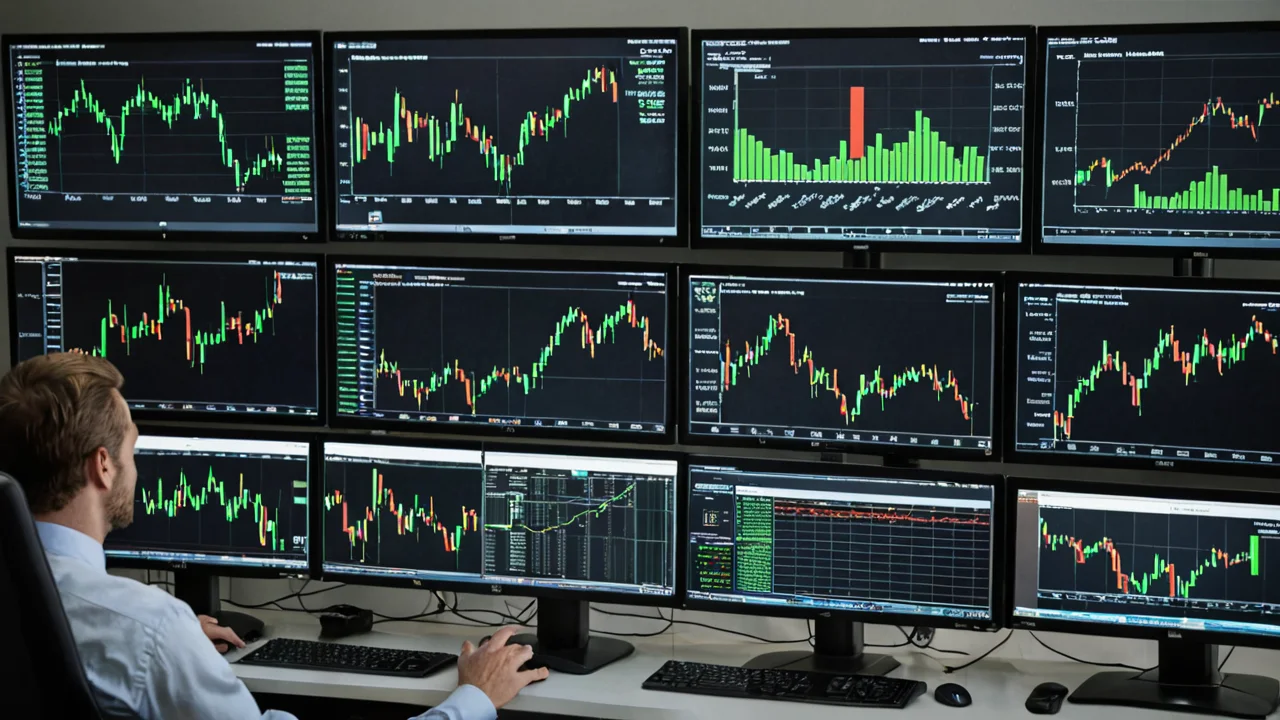

Quotex OTC Market Trading Hours in India: Best Time to Trade
Quotex runs over-the-counter (OTC) contracts on weekends and outside regular exchange sessions, which makes timing a real skill for Indian traders rather than an afterthought. This guide breaks down how OTC hours work on the platform, when Indian users tend to find the most liquid windows, and how to build a routine around them. If you want to test any of these sessions without risking capital, you can open a Quotex demo account first and compare timings side by side.


What OTC Trading Means on Quotex
OTC stands for over-the-counter. On Quotex, OTC contracts are priced by the platform itself rather than pulled directly from a live exchange order book. That distinction matters because it changes when you can trade and how the price behaves.
Regular assets like major forex pairs follow the global market calendar. They go quiet when exchanges close. OTC instruments, by contrast, are generated internally, so Quotex can keep them running during hours when normal markets are shut. This is why weekend trading exists on the platform at all.
For Indian users, the practical effect is simple: you are no longer limited to the hours when London or New York is active. You can trade on a Sunday afternoon in Mumbai if you want to.
The trade-off is that OTC pricing is synthetic, not exchange-driven. That means price action can look smoother or more predictable than real market data, and it also means you are fully dependent on the platform's own feed. Independent reviewers have flagged this as a fairness and transparency concern, so treat OTC sessions as a different game from standard assets, not a continuation of them.
- OTC contracts trade outside normal exchange hours
- Pricing comes from the platform, not a public order book
- Weekend availability is the main reason Indian traders use OTC
Key Takeaway: OTC on Quotex is a separate product with its own clock. Learn its rhythm before you size up.
Conditions in numbers
| Minimum deposit | $10 |
|---|---|
| Minimum trade | $1 |
| Maximum payout | up to 98% |
Conditions declared by the broker; checked against public sources · 2026-10-12 · source
Trade on a smoother platform
Faster charts, cleaner UI, fewer crashes.
Quotex OTC Market Timings in India
Quotex operates on a 24/7 style schedule for many OTC instruments, which means Indian traders can access them across the full day. The platform does not publish a single fixed "OTC opens at X" time that applies to every asset, so the honest answer is that availability depends on the instrument and the day.
What you can rely on is the structure. Weekday OTC sessions typically fill the gaps around standard market hours, and weekend sessions run through Saturday and Sunday when forex and stock markets are closed. A dedicated India-focused review notes that OTC trading is offered on weekends using synthetic pricing rather than underlying exchange data.
For an Indian trader, this creates three broad windows worth knowing:
- Early morning IST, when you catch the tail of the previous US session
- Afternoon IST, which overlaps with European market activity
- Late evening and night IST, which lines up with the US open
The best window is not the same for everyone. It depends on which assets you follow and how much screen time you can realistically commit. A trader in Delhi with a day job will use different hours than someone trading full-time from home.
If you want a deeper breakdown of how these sessions behave, the Quotex OTC weekend strategy guide walks through specific setups for each window.
Calculate the return on a trade
Profit $0
Returned in total $0
Lost if the trade fails $0
The calculator uses the payout the broker declares; the actual percentage depends on the asset and the moment of entry.
Open an account in minutes
No KYC delays — start trading the same day.
Best Time to Trade OTC on Quotex for Indian Users
There is no universal "golden hour" that works for every Indian trader, but there are patterns worth understanding. OTC price feeds tend to be more active when more users are online, because platform-generated pricing often reflects aggregated participation rather than pure market forces.
Evening IST sessions usually see the heaviest activity, since they overlap with European and US waking hours. That can mean tighter price movement and more frequent setups, but it can also mean choppier conditions if the feed is reacting to volume rather than fundamentals.
Morning IST is quieter. Some traders prefer this because the price action is slower and easier to read, especially on short expiries. Others find it too thin and unpredictable.
The most reliable approach is to pick two fixed windows and stick to them for a few weeks. Track your results in each. You will learn more from your own data than from any generic "best time" claim, because OTC behaviour shifts with platform updates and user activity.
A few practical pointers for Indian traders:
- Test the same asset at different hours before committing real money
- Avoid the first few minutes after a session transition, when pricing can be erratic
- Use the demo account to log results across a full week, not a single day
Key Takeaway: Your best OTC window is the one you can trade consistently and measure honestly. Consistency beats chasing the "perfect" hour.
Words worth pinning down
- Quick trading
- A contract with a fixed expiry chosen before entry; the result is settled at that moment, not when the trader closes it.
- Expiry
- The moment a contract is settled. It is fixed when the trade is opened and cannot be moved afterwards.
- Demo account
- A funded practice account with virtual money. Prices are live, the balance is not real.
Try quotex for yourself
Free demo first; switch to real money when ready.
Quotex OTC Weekend Trading India
Weekend trading is the main reason Indian users seek out OTC on Quotex. When forex and stock markets are closed, OTC instruments stay available, which gives traders something to do on Saturday and Sunday.
This is genuinely useful if you work during the week and only have free time on weekends. It is also where the risk profile changes most. With no underlying exchange data driving prices, the feed is entirely platform-generated. Independent reviews have raised concerns about price integrity and conflict of interest in exactly this scenario, since the platform both sets the price and takes the other side of your trade.
That does not make weekend OTC unusable. It does mean you should treat it as a distinct environment with its own rules.
- Weekend sessions run through Saturday and Sunday
- Pricing is synthetic, not tied to any exchange
- Volatility patterns differ from weekday sessions
- Position sizing should reflect the higher uncertainty
Many experienced traders reduce their trade size on weekends rather than skip them entirely. That way you stay active and keep learning without exposing yourself to the same risk you would take during a liquid weekday session.
For a full playbook on weekend setups, see the Quotex OTC weekend strategy breakdown.
The vocabulary of this part
- Risk per trade
- The share of the balance committed to a single contract.
- Technical indicator
- A calculation drawn over price history; it describes what has happened, not what will.
- Position sizing
- The rule that converts a balance into the amount committed to one contract.
Test the platform first
Identical to live mode — same charts, same speed.
How to Plan Your OTC Trading Schedule in India
Building a schedule is less about finding the perfect hour and more about matching the platform's rhythm to your own life. Indian Standard Time sits roughly 5.5 hours ahead of London and about 10.5 hours ahead of New York, which means the busiest global sessions land in your afternoon and evening.
Start by mapping your available hours. If you can only trade after 8 PM IST, you are naturally aligned with US market activity, which is when OTC feeds often see more movement. If you trade in the morning, you are in a quieter window that suits short, focused sessions.
Then layer in the OTC-specific factor: weekend availability. Your weekday schedule and weekend schedule will look different, and that is fine. What matters is that you know in advance which assets you will trade and at what times, so you are not making decisions on the fly.
A simple framework:
- Pick two weekday windows and one weekend window
- Choose a small set of assets and stick to them
- Log every session, even the losing ones
- Review weekly and cut the windows that consistently underperform
The traders who struggle most with OTC are usually the ones who trade randomly. They jump in whenever they feel like it, on whatever asset is moving, with no reference point. A fixed schedule removes that noise and gives you something to actually measure.
Words worth pinning down
- Native app
- An application installed from a store and built for the operating system it runs on.
- Web terminal
- The same platform used in a browser, without installation.
- Push notification
- A message the app shows outside the browser, used for price alerts and contract results.
Better-rated platform
App-store rating consistently above 4.0.
Adjusting Your Strategy for Different OTC Sessions
OTC sessions are not interchangeable. A setup that works in a quiet morning window may fail completely during a volatile weekend session. The instrument behaves differently, and so should your approach.
During quieter hours, price tends to move in tighter ranges. Short expiries can work well here because you are reading small, contained movements. During busier hours, ranges widen and reversals become more common, which favours slightly longer expiries and more patience before entry.
Weekend sessions sit somewhere in tradeween but with a different character. The synthetic feed can produce patterns that look clean and predictable, which is exactly why some traders gravitate to weekends. It is also why caution is warranted, since clean patterns on a platform-controlled feed are not the same as clean patterns on a real market.
Match your expiry length to the session, not to your mood. If you are in a slow window, short expiries make sense. If you are in a fast one, forcing a 60-second trade into choppy conditions is a recipe for noise-driven losses.
If you are still developing your overall approach, the Quotex trading strategy guide covers the fundamentals that apply across all sessions, OTC or otherwise.
Words worth pinning down
- APK file
- An Android package installed outside the store; the publisher, not the file, decides whether it is safe.
- App permissions
- What an installed application is allowed to reach on the device.
- Underlying asset
- The instrument a contract is written on — a currency pair, an index, a commodity or a crypto asset.
Risk Factors Indian Traders Should Know
Timing is only half the picture. The other half is understanding what you are actually trading when you use OTC instruments on Quotex, and what protections you do or do not have.
Multiple independent review sites and broker-check services classify Quotex as unregulated by any government financial authority. It does not hold licences from major regulators, and at least one India-focused assessment states plainly that Quotex is not registered with SEBI and that its binary and fixed-time options product falls into a category Indian regulators have acted against. Another review notes that Indian residents may only trade forex through RBI and SEBI-approved venues under FEMA rules.
That context matters for OTC specifically, because OTC trading removes even the indirect link to a regulated underlying market. You are trading a platform-generated contract on an unregulated platform. There is no external price source to appeal to and no regulatory body to escalate a dispute to.
This does not mean you cannot trade. It means you should size positions as if there is no safety net, because in a regulatory sense there is not one.
- No SEBI registration, per India-focused reviews
- No tier-1 regulatory oversight
- OTC pricing is platform-controlled
- Dispute resolution options are limited
Key Takeaway: Treat OTC trading on Quotex as high-risk activity with no regulatory backstop. Position sizing should reflect that reality.
The vocabulary of this part
- Offshore licence
- A licence issued outside the trader's country; it binds the broker to that register, not to local law.
- Segregated funds
- Client money held in accounts separate from the company's own money.
- Register entry
- The record a regulator publishes for a licensed company; its absence is itself a fact.
Trade with a safer alternative
Verified ownership, transparent payouts.
Frequently Asked Questions
-
What are the Quotex OTC market trading hours in India?
Quotex offers OTC instruments across a 24/7 style schedule for many assets, with weekend sessions running through Saturday and Sunday. Exact availability depends on the specific instrument, and the platform does not publish one fixed opening time that applies to all OTC assets.
-
Can I trade OTC on Quotex on weekends in India?
Yes. Weekend OTC trading is one of the main reasons Indian users use these instruments, since regular forex and stock markets are closed. Pricing during these sessions is synthetic and generated by the platform rather than pulled from an exchange.
-
What is the best time to trade OTC on Quotex for Indian traders?
There is no single best time. Evening IST sessions tend to see more activity because they overlap with European and US hours, while morning sessions are quieter and suit shorter, more focused trades. The most reliable approach is to test two fixed windows over several weeks and track your own results.
-
Is OTC trading on Quotex regulated in India?
India-focused reviews state that Quotex is not registered with SEBI and that its binary and fixed-time options product falls into a category Indian regulators have acted against. Independent broker-check services classify the platform as unregulated, so OTC trading carries no SEBI or RBI-recognised protection.
-
How do I start testing OTC sessions without risking money?
Use the demo account, which lets you trade with virtual funds and compare how different assets behave across morning, evening and weekend windows. Log your results for at least a week before moving to live trades, and keep your position sizes small when you do.
-
Does OTC pricing on Quotex follow real market data?
No. OTC contracts on Quotex use platform-generated synthetic pricing rather than underlying exchange data. This is why they remain available when normal markets are closed, and it is also why price behaviour can differ noticeably from standard assets.
Ready to compare OTC sessions for yourself? Open a Quotex account and start with the demo to map out which hours actually suit your schedule.
Short answers
- What are the Quotex OTC market trading hours in India?
- Quotex offers OTC instruments across a 24/7 style schedule for many assets, with weekend sessions running…
- Can I trade OTC on Quotex on weekends in India?
- Yes
- What is the best time to trade OTC on Quotex for Indian traders?
- There is no single best time
- Is OTC trading on Quotex regulated in India?
- India-focused reviews state that Quotex is not registered with SEBI and that its binary and fixed-time…
- How do I start testing OTC sessions without risking money?
- Use the demo account, which lets you trade with virtual funds and compare how different assets behave…
- Does OTC pricing on Quotex follow real market data?
- No