Quotex Support and Resistance Zone Strategy for Beginners
Support and resistance zones are the backbone of short-term trading on fixed-time platforms, and they work just as well on Quotex as anywhere else. This guide walks Indian beginners through drawing clean zones, timing entries on 5-minute charts, and applying risk rules that keep small accounts alive. If you want to follow along on a live chart, you can Open a Quotex Account → and practise the setup in demo mode first.


Why Support and Resistance Zones Matter on Quotex
Fixed-time trading rewards one skill above all others: reading where price is likely to pause or reverse. Support and resistance zones mark those areas. A support zone is a band where buyers have repeatedly stepped in and pushed price up. A resistance zone is a band where sellers have repeatedly capped rallies.
On Quotex, contracts expire in short windows, from roughly 60 seconds up to several hours. That means your entry has to be close to a decision point, not somewhere in the middle of empty space. Zones give you that decision point.
A zone is not a line. Beginners draw a single thin line and wonder why price "breaks" it by a few pips and then reverses. Draw a band instead, wide enough to contain the wicks of at least two or three touches.
- Mark zones on higher timeframes first (1-hour or 4-hour), then drop to 5 minutes for entries
- Require at least two clear touches before a zone counts
- Treat the whole band as the decision area, not one exact price
Key Takeaway: Zones are areas of probability, not walls. Your job is to react to how price behaves inside the band, not to predict the exact pip where it turns.
Conditions in numbers
| Minimum deposit | $10 |
|---|---|
| Minimum trade | $1 |
| Maximum payout | up to 98% |
Conditions declared by the broker; checked against public sources · 2026-10-12 · source
quotex responds in minutes
Live chat in English, 24/7 coverage.
How to Draw Support and Resistance Zones on Quotex Charts
Start on the 1-hour chart. Scroll back far enough to see at least a few weeks of price action. Look for swing highs and swing lows where price reversed more than once. Those are your candidate zones.
Draw a rectangle from the body of the first reversal candle to the tip of the wick. That band is your zone. Repeat for the opposite side. Most charts will give you two or three clean zones per asset, and that is plenty.
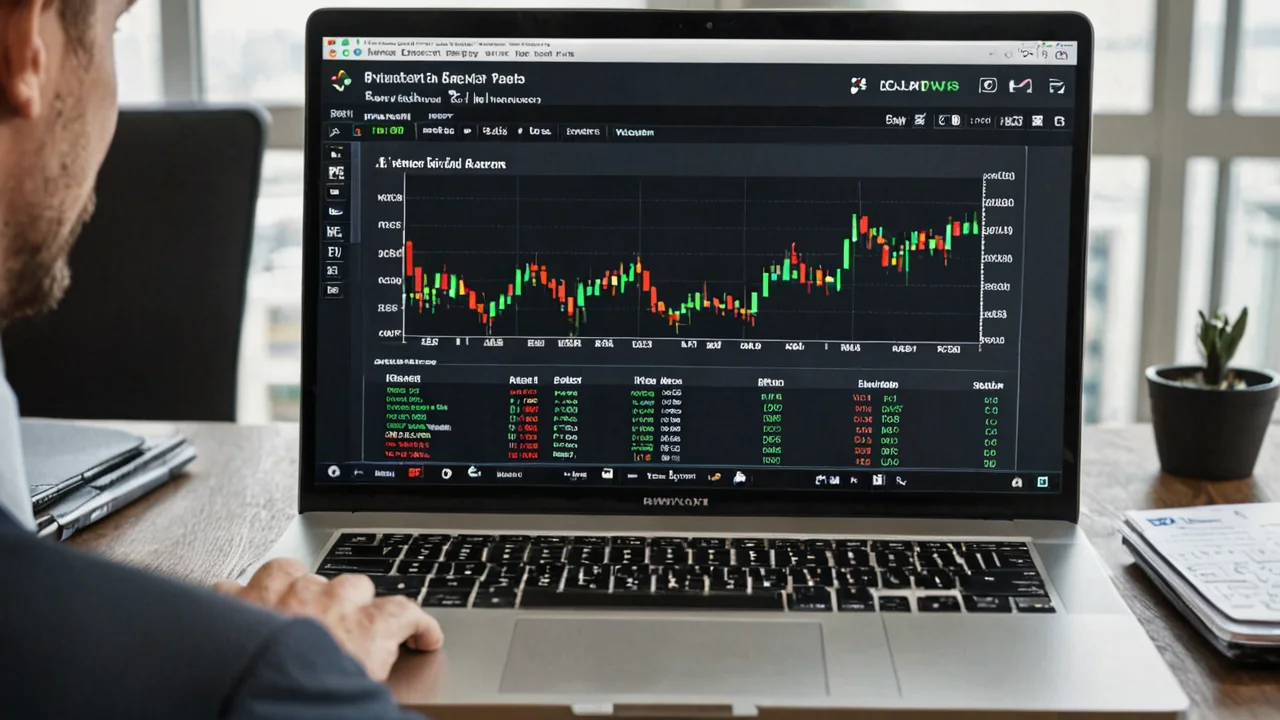
Then switch to the 5-minute chart. The same zones should appear, but now you can see how price reacts inside them candle by candle. This is where the quotex price action trading approach becomes practical, because you are reading raw candles rather than stacking indicators.
A few practical rules for drawing:
- Use the wick-to-body range, not a single horizontal line
- Delete any zone that price has already sliced through with a full-bodied candle
- Keep a maximum of three zones on screen, more creates noise and hesitation
Once your zones are marked, the chart becomes a map. You know where you are, and you know where the interesting decisions happen.
Calculate the return on a trade
Profit $0
Returned in total $0
Lost if the trade fails $0
The calculator uses the payout the broker declares; the actual percentage depends on the asset and the moment of entry.
Reading Zone Reactions on 5-Minute Charts
The 5-minute chart is the sweet spot for Quotex fixed-time contracts. It is fast enough to give you several setups per session, and slow enough that a single candle still means something.
Watch how price approaches your zone. A slow drift into the band with small candles suggests hesitation. A sharp spike into the band with a long wick suggests rejection. Both can be tradeable, but they call for different timing.
The strongest signal is a rejection candle that closes back outside the zone. If price pokes into resistance, prints a long upper wick, and closes below the band, sellers are defending that area. That is your cue to look for a lower-direction contract.
Words worth pinning down
- Quick trading
- A contract with a fixed expiry chosen before entry; the result is settled at that moment, not when the trader closes it.
- Expiry
- The moment a contract is settled. It is fixed when the trade is opened and cannot be moved afterwards.
- Demo account
- A funded practice account with virtual money. Prices are live, the balance is not real.
- Rejection wick plus close outside the zone
- high-quality signal
- Full-bodied candle closing inside the zone
- wait, the zone is being tested
- Full-bodied candle closing through the zone
- the zone has failed, redraw
Key Takeaway: Judge the zone by the candle that closes, not the wick that touches. Closes tell you who won the fight.
Entry Timing and Confirmation Rules
Timing is where most beginners lose money on Quotex, not zone drawing. You can mark a perfect resistance band and still lose if you enter on the first touch with no confirmation.
Wait for the candle to close. On a 5-minute chart, that means up to five minutes of patience per setup. If price is testing resistance, let the candle finish. If it closes as a rejection, the next candle is your entry window.
Confirmation can come from a few simple sources:
- A rejection candle closing outside the zone
- A small double top or double bottom forming inside the band
- Momentum shifting, visible as shrinking candle bodies as price pushes into the zone
Avoid entering mid-candle just because price touched the band. That is guessing, not trading. The quotex trend reversal strategy guide covers how to combine zone reactions with reversal structure for stronger setups.
Expiry choice matters too. If you enter on a 5-minute rejection, a contract expiring in 5 to 15 minutes gives the move room to develop. Very short expiries of 60 seconds turn a good read into a coin flip.
The vocabulary of this part
- Risk per trade
- The share of the balance committed to a single contract.
- Technical indicator
- A calculation drawn over price history; it describes what has happened, not what will.
- Position sizing
- The rule that converts a balance into the amount committed to one contract.
Risk Rules for Small Indian Accounts
Quotex lists a minimum deposit of 10 USD, often equated to roughly 800 to 900 INR, with a minimum trade size of 1 USD. That low entry point is convenient, but it also tempts beginners into oversizing.
Set a hard rule: risk no more than 2 to 5 percent of your account on a single contract. On a small balance, that often means sticking to the minimum trade size until your account grows. One dollar per trade on a 100 USD balance is already 1 percent, which is sensible.
Three losses in a row means stop for the session. Zone trading has losing streaks, and revenge trading after a streak is the fastest way to wipe a small account.
- Cap daily losses at a fixed amount before you start
- Never increase trade size to "win it back"
- Log every trade with the zone, the confirmation, and the outcome
Key Takeaway: Position sizing protects you from bad reads. Even a 60 percent win rate fails if one oversized trade erases ten small wins.
The vocabulary of this part
- Trading journal
- A record of entries, exits and reasons, kept to review decisions rather than outcomes.
- Underlying asset
- The instrument a contract is written on — a currency pair, an index, a commodity or a crypto asset.
- Spread
- The gap between buying and selling price quoted at the same moment.
Common Beginner Mistakes With Zone Trading
Most zone-trading losses on Quotex come from a short list of repeatable errors. Fixing them costs nothing and improves results faster than any new indicator.
Drawing too many zones is the first. A chart covered in bands gives you a reason to trade everywhere, which means you trade nowhere with conviction. Two or three zones is enough.
Trading against the higher-timeframe trend is the second. If the 1-hour chart is in a clear uptrend, shorting into support is fighting the tape. Zones work best when they align with the dominant direction.
The third mistake is ignoring failed zones. When price closes cleanly through a resistance band, that band often flips into support. Traders who keep shorting the old resistance get run over. Redraw and respect the flip.
- Too many zones on screen
- Counter-trend entries at strong zones
- Ignoring zone flips after a clean break
- Entering before the candle closes
The quotex trading strategy hub has more setups you can layer on top of zone reading once the basics feel automatic.
Words worth pinning down
- Asset list
- The instruments a platform quotes; it differs by region and by time of day.
- Order ticket
- The panel where amount, direction and expiry are set before a contract is opened.
- Trading session
- The hours an asset is quoted; outside them contracts on it cannot be opened.
Practising the Strategy Before Going Live
Demo mode is the cheapest classroom available. Quotex offers a free demo account with around 10,000 units of virtual balance, which is more than enough to test zone trading without risking rupees.
Spend at least two weeks in demo. Mark zones each morning, wait for reactions, and log every trade. You are looking for consistency in your process, not a winning streak. If you cannot follow your own rules in demo, live money will not fix that.
When you move to live trading, start with the minimum trade size and a small deposit. Scale up only after a full month of disciplined execution. The goal in year one is survival and skill, not profit.
Key Takeaway: Demo trading builds the habit of waiting for confirmation. That habit is worth more than any single winning trade.
The vocabulary of this part
- Market order
- An instruction to open a position at the price available now, not at a chosen level.
- Slippage
- The gap between the price requested and the price received when the market moves during execution.
Frequently Asked Questions
-
What is the best timeframe for support and resistance zones on Quotex?
Mark zones on the 1-hour or 4-hour chart, then execute on the 5-minute chart. Higher timeframes filter out noise, and the 5-minute chart gives you precise entry timing for short fixed-time contracts.
-
How many touches make a zone valid?
At least two clear reactions, ideally three. A single touch is just a random high or low. Two or more touches show that buyers or sellers are actually defending that area.
-
Can I use support and resistance zones with 60-second contracts?
You can, but it is much harder. Very short expiries leave no room for the move to develop, so a correct zone read can still lose to random noise. Expiries of 5 to 15 minutes suit zone trading far tradeter.
-
Is Quotex regulated for Indian traders?
Independent reviews state that Quotex is not regulated by any government financial authority and holds no SEBI licence. Indian rules restrict forex trading to RBI and SEBI approved venues, so treat any use of the platform as high-risk and legally uncertain.
-
How much should I risk per trade on a small account?
Keep it to 2 to 5 percent of your balance per contract. With the platform's minimum trade size of 1 USD, a small account can stay within that range while you build skill and consistency.
-
What happens when price breaks through a zone?
A clean close through a zone means the zone has failed. Redraw it, and watch whether the old resistance becomes new support or the reverse. Zone flips are some of the strongest setups once you learn to spot them.
Short answers
- What is the best timeframe for support and resistance zones on Quotex?
- Mark zones on the 1-hour or 4-hour chart, then execute on the 5-minute chart
- How many touches make a zone valid?
- At least two clear reactions, ideally three
- Can I use support and resistance zones with 60-second contracts?
- You can, but it is much harder
- Is Quotex regulated for Indian traders?
- Independent reviews state that Quotex is not regulated by any government financial authority and holds no…
- How much should I risk per trade on a small account?
- Keep it to 2 to 5 percent of your balance per contract
- What happens when price breaks through a zone?
- A clean close through a zone means the zone has failed