
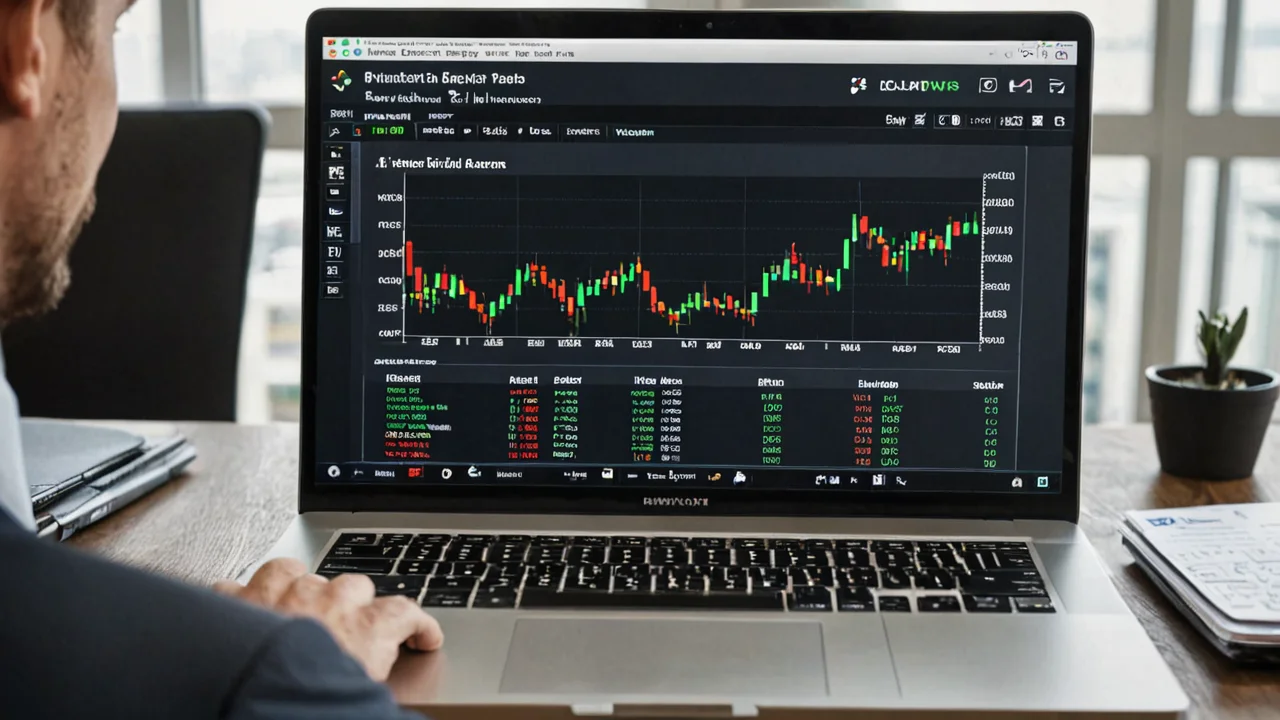
Bullish & Bearish Engulfing Candle Strategy on Quotex (India )
The engulfing candle is one of the few price action signals that works on almost any asset class, and on a fixed-time platform like quotex it can be paired with a clean expiry rule instead of a stop-loss. This guide walks Indian traders through what a bullish and bearish engulfing pattern actually looks like, how to confirm it before you click higher or lower, and how to pick a timeframe and expiry that fit short-term binary-style contracts.


No indicator clutter, no guesswork, just a repeatable process you can test on a demo account first.
What an Engulfing Candle Actually Tells You
An engulfing candle is a two-candle formation. The second candle's real body completely covers the real body of the first candle, which signals a shift in who is controlling the price at that moment. A bullish engulfing pattern appears after a down move: a small bearish candle is followed by a larger bullish candle that opens near the prior close and closes above the prior open. The bearish version is the mirror image, a small bullish candle swallowed by a bigger bearish one after an up move.
The logic is simple. Sellers pushed price down, then buyers stepped in with enough force to erase the entire previous session's progress. That reversal of pressure is what traders react to.
The real body matters more than the wicks. A pattern where the second candle's body engulfs the first body is the textbook version. If only the wicks overlap, the signal is much weaker and should be treated with suspicion.
Conditions in numbers
| Minimum deposit | $10 |
|---|---|
| Minimum trade | $1 |
| Maximum payout | up to 98% |
Conditions declared by the broker; checked against public sources · 2026-10-12 · source
- Bullish engulfing
- small red candle, then a larger green candle that closes above the red candle's open.
- Bearish engulfing
- small green candle, then a larger red candle that closes below the green candle's open.
- Context is everything
- the pattern means far more when it forms at a support or resistance zone than in the middle of nowhere.
Key Takeaway: An engulfing candle is a reversal signal, not a continuation signal. It only earns attention when it appears after a clear directional move into a meaningful price level.
Ready to try quotex?
UPI, cards, crypto — pick your method.
Reading Bullish Engulfing Patterns for a Higher Entry
A bullish engulfing setup starts with a downtrend or a pullback into support. You want to see price make a series of lower highs, then print a small bearish candle as selling momentum stalls. The next candle opens near that close and drives up hard, closing above the previous candle's open. That close is your trigger.
On Quotex, the entry decision is binary in the literal sense: you choose higher or lower for a fixed expiry. So the bullish engulfing pattern maps neatly onto a "higher" position, provided the candle has already closed. Do not enter mid-candle. A candle that looks like it is engulfing can reverse before the close, and you will have committed to a direction on incomplete information.
Confirmation is what separates a decent setup from a coin flip. Look for the pattern to form right at a level you already marked, such as a prior swing low or a horizontal support zone. If you want a deeper walkthrough of marking those levels, the support and resistance zone strategy guide covers the mechanics.
Volume and momentum help, but price action leads. If your platform shows any activity indicator, a stronger-than-average move on the engulfing candle adds confidence. If it does not, rely on the size of the body relative to recent candles.
- Wait for the engulfing candle to close fully before acting.
- Prefer setups where the pattern forms at a tested support level.
- Skip the signal if the engulfing candle is tiny compared to recent volatility.
Key Takeaway: The bullish engulfing pattern is only actionable on a closed candle at a real support level. Everything else is a guess dressed up as a strategy.
Calculate the return on a trade
Profit $0
Returned in total $0
Lost if the trade fails $0
The calculator uses the payout the broker declares; the actual percentage depends on the asset and the moment of entry.
Open an account in minutes
No KYC delays — start trading the same day.
Bearish Engulfing Candle quick trading Strategy Basics
The bearish engulfing pattern is the same idea in reverse and it tends to appear at the top of a rally. Price climbs into resistance, prints a small green candle as buyers lose steam, then a larger red candle opens near that close and closes below the green candle's open. That close signals that sellers have taken control, at least for the moment.
For a fixed-time contract, this maps to a "lower" position. The same discipline applies: wait for the close, confirm the location, and only then commit. A bearish engulfing candle that forms in the middle of a range, far from any resistance, is a much weaker signal than one that forms right at a ceiling the market has already respected.
One nuance Indian traders should internalise: engulfing patterns fail often in choppy, sideways markets. When price is bouncing inside a tight range with no clear direction, these two-candle formations appear constantly and mean very little. Save your attention for trending conditions or clean reactions at key levels.
A failed engulfing pattern can itself be a signal. If a bearish engulfing candle forms at resistance but the next candle pushes back up and closes above it, that failure tells you buyers are stronger than the pattern suggested. Some traders use that as a reason to look the other way entirely.
- Bearish engulfing works best after an extended up move into resistance.
- The larger the second candle's body, the more decisive the shift in pressure.
- Avoid acting on the pattern during flat, range-bound conditions.
Key Takeaway: A bearish engulfing candle is a "lower" signal only when it closes at resistance after a real rally. In a sideways market, treat it as noise.
The vocabulary of this part
- Risk per trade
- The share of the balance committed to a single contract.
- Technical indicator
- A calculation drawn over price history; it describes what has happened, not what will.
- Position sizing
- The rule that converts a balance into the amount committed to one contract.
Refine your strategy on demo
Same charts as live trading, no real money.
Confirmation Rules on the 5 Minute Chart
The five-minute chart is where most short-term Quotex traders live, and it is a reasonable home for engulfing setups because you get several clean signals per session without the noise of a one-minute chart. The trade-off is that five-minute candles produce more false signals than higher timeframes, so confirmation rules matter more, not less.
Here is a practical confirmation checklist for the five-minute chart. First, the engulfing candle must close beyond the prior candle's open, not just touch it. Second, the pattern should align with the broader direction of the last several candles, or form at a level that has already caused a reaction. Third, the candle immediately before the engulfing candle should be relatively small, which shows momentum stalling before the reversal.
Do not stack confirmations until the setup never triggers. New traders often add so many filters that a valid pattern gets skipped because one minor condition was not perfect. Pick two or three rules you trust and apply them consistently.
If you are unsure which timeframe suits your schedule and risk appetite, the chart timeframe selection guide breaks down how one-minute, five-minute and longer charts change the frequency and reliability of signals.
- Confirm the close, not the wick.
- Check that the pattern sits at a level, not in open space.
- Make sure the prior candle is small, indicating a stall.
Key Takeaway: On the five-minute chart, the close of the engulfing candle plus its location at a level are the two confirmations that carry the most weight.
Words worth pinning down
- Quick trading
- A contract with a fixed expiry chosen before entry; the result is settled at that moment, not when the trader closes it.
- Expiry
- The moment a contract is settled. It is fixed when the trade is opened and cannot be moved afterwards.
- Demo account
- A funded practice account with virtual money. Prices are live, the balance is not real.
Better local methods on quotex
Faster withdrawals than offshore alternatives.
Choosing Expiry to Match the Pattern
Expiry selection is where many engulfing strategies fall apart. The pattern tells you about a short-term shift in pressure, so the expiry should be short enough to capture that shift but long enough that normal noise does not decide the outcome for you. A common approach is to set the expiry to roughly the length of two to three candles on your chosen timeframe, giving the move room to develop without overstaying.
On a five-minute chart, that logic points toward expiries in the range of ten to fifteen minutes. On a one-minute chart, shorter expiries make sense. The key is to avoid the trap of picking a very long expiry because you are unsure, which turns a precise short-term signal into a vague directional trade.
Match the expiry to the signal, not to your hope. If the engulfing pattern suggests a quick reversal, a long expiry gives the market time to do the opposite of what you expected.
Quotex offers expiries ranging from roughly 60 seconds up to several hours, so the platform gives you flexibility. That flexibility is also a risk, because it invites overthinking. Decide your expiry rule before you trade and stick to it.
- Short timeframes pair with short expiries.
- Give the trade two to three candles of room.
- Never extend the expiry to "give it a chance" after a losing setup.
Key Takeaway: The expiry should reflect how long the engulfing signal stays relevant. Two to three candles on your timeframe is a sensible starting rule.
The vocabulary of this part
- Trading journal
- A record of entries, exits and reasons, kept to review decisions rather than outcomes.
- Underlying asset
- The instrument a contract is written on — a currency pair, an index, a commodity or a crypto asset.
- Spread
- The gap between buying and selling price quoted at the same moment.
Switch to quotex today
Lower minimums, transparent fees.
Combining Engulfing Patterns With Candlestick Context
An engulfing candle in isolation is a single data point. It becomes far more useful when you read it alongside the candles around it. A bullish engulfing pattern that forms after a long series of red candles, right at a support zone, tells a very different story than the same pattern appearing after two candles of drift.
This is where a broader candlestick vocabulary pays off. Doji candles, hammers and shooting stars all describe the same underlying battle tradeween buyers and sellers, and recognising them together sharpens your read on whether an engulfing signal is likely to hold. The candlestick patterns strategy guide covers the core formations and how they interact.
Context turns a pattern into a setup. The engulfing candle is the trigger, but the surrounding price structure is the reason the trigger is worth pulling.
Indian traders often trade in the evening after work, which coincides with periods of higher volatility in some markets. That volatility can make engulfing patterns more decisive, but it can also produce larger wicks and messier closes. Adjust your expectations to the session you are trading.
- Read the three or four candles before the pattern, not just the two that form it.
- Note whether the market is trending or ranging before you act.
- Treat high-volatility sessions with extra caution on tight expiries.
Key Takeaway: The engulfing candle is the final piece of a story the surrounding candles have already been telling. Learn to read the whole picture.
The vocabulary of this part
- Trading session
- The hours an asset is quoted; outside them contracts on it cannot be opened.
- Market order
- An instruction to open a position at the price available now, not at a chosen level.
- Slippage
- The gap between the price requested and the price received when the market moves during execution.
Test it risk-free first
No deposit needed — just register and trade.
Risk Discipline for Indian Traders
Every strategy on a fixed-time platform carries risk, and the engulfing candle is no exception. Because Quotex contracts settle at expiry with no stop-loss, your risk per trade is the full stake you commit. That makes position sizing the single most important control you have. A common approach is to risk only a small fixed percentage of your balance per trade, so a losing streak does not wipe out your account.
It is also worth being clear-eyed about the regulatory picture. Independent reviews describe Quotex as a quick trading and fixed-time trading platform that is not regulated by any government financial authority, and India-focused assessments note it is not registered with SEBI. That means there is no formal investor protection framework behind your account. Trade only what you can afford to lose, and treat any capital on the platform as at risk.
A demo account is not optional for beginners. Quotex offers a free demo with virtual balance, and it is the right place to test whether your engulfing rules actually hold up before real money is involved.
- Size positions so a series of losses does not end your account.
- Test the strategy on demo before committing real capital.
- Understand that the platform operates without recognised regulatory oversight in India.
Key Takeaway: The best engulfing setup in the world cannot save an account that is over-leveraged on stake size. Risk control comes first.
Trade with a safer alternative
Verified ownership, transparent payouts.
Frequently Asked Questions
-
What is a bullish engulfing candle on Quotex?
It is a two-candle pattern where a small bearish candle is followed by a larger bullish candle whose body completely covers the first candle's body. It signals that buyers have taken control and is typically read as a "higher" signal when it forms at support after a down move.
-
How do I confirm a bearish engulfing pattern before entering?
Wait for the second candle to close fully below the first candle's open, check that the pattern forms at a resistance level rather than in open space, and make sure the prior candle was small, showing momentum stalling. Two or three consistent confirmations are enough.
-
Which timeframe works best for engulfing candles on Quotex?
The five-minute chart is a popular choice because it produces several clean signals per session without the noise of a one-minute chart. Higher timeframes give fewer but generally more reliable signals. Match your expiry to two or three candles on whichever timeframe you choose.
-
Is Quotex regulated for Indian traders?
Independent reviews state that Quotex is not regulated by any government financial authority and is not registered with SEBI. India-focused assessments describe it as unauthorised for Indian retail use. Treat any trading as high-risk and only commit capital you can afford to lose.
-
Can I practise the engulfing strategy without risking money?
Yes. Quotex offers a free demo account with virtual balance, which lets you test your confirmation rules and expiry choices before using real funds. Use it to build a track record of the setup across different market conditions.
Ready to test the engulfing candle strategy yourself? Open a Quotex account and start on the demo before you trade live.
Short answers
- What is a bullish engulfing candle on Quotex?
- It is a two-candle pattern where a small bearish candle is followed by a larger bullish candle whose body…
- How do I confirm a bearish engulfing pattern before entering?
- Wait for the second candle to close fully below the first candle's open, check that the pattern forms at a…
- Which timeframe works best for engulfing candles on Quotex?
- The five-minute chart is a popular choice because it produces several clean signals per session without…
- Is Quotex regulated for Indian traders?
- Independent reviews state that Quotex is not regulated by any government financial authority and is not…
- Can I practise the engulfing strategy without risking money?
- Yes

Quotex Account Verification Failed? Fix Guide 2026